
How Social Media Affects Students’ Learning and Academic Performance
How social media affects students’ learning and academic performance is an important topic in modern education.Social media has become an important part of students’ daily lives. Platforms such as YouTube, Instagram, Tiktok, Facebook, and online communities allow students to communicate, discover information, and share deas.To learn more read our guide on How Students Can Improve focus during study.
But how does social media affect students’ learning and academic performance?
Social media can support education by providing useful learning resources, educational videos, study communities, and opportunities for collaboration. However, excessive or unplanned use can also create distractions, affect concentration, encourage procrastination, and interfere with study time.
In this article, we will explore the positive and negative effects of social media on students and discuss practical ways to use social media more effectively for learning.
What Is the Relationship Between Social Media and Student Learning?
Social media has changed the way students find and share information. Students can access tutorials, educational videos, online discussions, study groups, and learning resources from many different sources.
For example, a student who is having difficulty understanding a mathematics topic can find an educational video that explains the concept in a different way. Similarly, students can use online communities to discuss assignments and exchange useful study resources.
However, simply having access to information does not guarantee better learning. Students need to evaluate information carefully and avoid distractions while studying.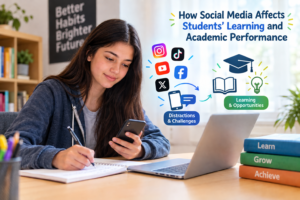
How Social Media Affects Students
Positive Effects :
1. Access to Educational Resources
Social media provides students with access to a wide range of educational content.
Students can find:
- Educational videos
- Tutorials
- Study guides
- Infographics
- Expert discussions
- Online courses
- Educational communities
- Language-learning resources
These resources can complement traditional classroom learning and help students explore subjects in greater depth.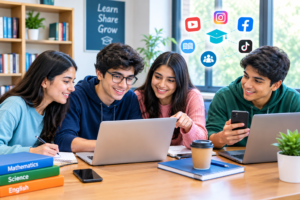
2. Collaborative Learning
Social media can make collaboration between students easier.
Students can create study groups, discuss assignments, share notes, exchange ideas, and help classmates understand difficult concepts.
When used responsibly, online collaboration can support communication and teamwork skills.
3. Communication With Teachers and Classmates
Digital platforms can make communication more convenient.
Students may use school-approved platforms or online groups to receive announcements, discuss assignments, ask questions, and communicate with classmates.
Clear boundaries should always be maintained when communicating with teachers and school staff.
4. Exposure to New Ideas
Social media exposes students to different perspectives, cultures, subjects, and educational communities.
Following reputable educators, schools, universities, libraries, and educational organizations can help students discover useful information outside their regular classroom environment.
Students should still verify important information before using it for academic work.
5. Development of Digital Literacy
Responsible social media use can help students develop important digital skills.
These include:
- Evaluating online information
- Identifying unreliable sources
- Understanding digital privacy
- Communicating online
- Creating digital content
- Recognizing misleading information
- Understanding online advertising
Digital literacy is increasingly important in education and everyday life.
How Social Media Affects Students
Negative Effects:
Although social media can provide educational benefits, it can also create challenges.
1. Distraction During Study
Notifications, messages, videos, and entertainment content can interrupt students while they are studying.
A student may open an app for a few minutes and then spend much longer browsing unrelated content.
Turning off unnecessary notifications can help create a more focused study environment.
2. Procrastination
Social media can make it easy to delay homework, reading, or revision.
For example, a student may decide to check social media before starting an assignment. A short break can turn into a much longer browsing session.
Creating specific study and social-media periods can help students manage their time.
3. Difficulty Maintaining Concentration
Constantly switching between social media, messages, videos, and schoolwork can make focused study more difficult.
Students working on challenging subjects may benefit from putting their phones away or using focus settings during important study sessions.
4. Poor Time Management
Unplanned social media use can take time away from important activities such as:
- Homework
- Reading
- Exam preparation
- Sleep
- Exercise
- Family time
- Other responsibilities
The issue is not simply whether students use social media, but how that use fits into their overall routine.
5. Unreliable Information
Not everything posted on social media is accurate.
Students may encounter misleading claims, inaccurate statistics, edited videos, or information without reliable evidence.
Before using information in an assignment, students should check the original source and compare important claims with trustworthy references.
How Social Media Can Affect Academic Performance
The relationship between social media and academic performance is complex.
Social media can support learning when students use it to access educational resources, collaborate with classmates, or explore useful topics.
On the other hand, frequent distractions and unplanned browsing can take time away from studying and make it harder to concentrate.
The effect can therefore depend on several factors, including:
- The purpose of social media use
- How much time students spend online
- The type of content they consume
- Their study habits
- Their ability to manage distractions
- Whether social media complements or replaces study time
For example, watching an educational tutorial to understand a difficult concept is very different from repeatedly checking entertainment content while completing homework.
Social Media and Study Habits
Effective study habits require attention, consistency, and time management.
Students can create healthier digital habits by separating study time from recreational social media use.
A Simple Focused Study Routine
Students can try the following routine:
- Choose one specific study goal.
- Put unnecessary notifications on silent.
- Focus on the study task for a planned period.
- Take a short, planned break.
- Review what you learned.
- Use social media during a separate leisure period.
The exact routine can be adjusted according to the student’s schedule and learning needs.
How Students Can Use Social Media for Learning
Students do not necessarily need to stop using social media. Instead, they can learn to use it more intentionally.
Follow Reliable Educational Accounts
Follow reputable educators, schools, universities, libraries, museums, and educational organizations.
Create Study Communities
Students can create appropriate study groups with classmates to discuss assignments, exchange resources, and prepare for exams.
Save Useful Educational Content
When students find helpful tutorials or explanations, they can save them and return to the material during a dedicated study session.
Verify Information
Before using social-media information for academic work, students should check the source and compare important information with reliable references.
Turn Off Unnecessary Notifications
Reducing notifications can make it easier to stay focused while completing homework or preparing for exams.
Practical Example: Using Social Media as a Study Tool
Imagine a student preparing for a science examination.
Instead of randomly scrolling through social media, the student could:
- Find a reputable educational video about the topic.
- Watch the lesson carefully.
- Write down important concepts.
- Compare the information with class notes or a textbook.
- Practice answering questions about the topic.
- Discuss difficult concepts with classmates.
In this situation, social media becomes an additional learning resource rather than simply a source of entertainment.
Common Social Media Mistakes Students Should Avoid
Studying With Constant Notifications
Frequent notifications can interrupt concentration.
Better approach: Silence unnecessary notifications during focused study periods.
Trusting Every Educational Post
Popular content is not automatically accurate.
Better approach: Check important information against reliable sources.
Using Educational Videos Instead of Studying
Watching a video does not always mean that a student has mastered the subject.
Better approach: Combine videos with note-taking, reading, practice questions, and active learning.
Taking Unlimited Social Media Breaks
An unplanned break can consume valuable study time.
Better approach: Set a specific time limit for recreational social media use.
Constantly Multitasking
Switching between apps and assignments can make focused work more difficult.
Better approach: Give important academic tasks your full attention for a defined period.
Best Practices for Healthy Social Media Use
Set Clear Boundaries
Decide when social media is being used for education and when it is being used for entertainment.
Prioritize Academic Responsibilities
Complete important assignments and study tasks before spending extended periods on recreational content.
Protect Study Time
Create periods when distracting apps and notifications are turned off.
Evaluate Online Information
Check the source, date, evidence, and original publication before relying on online information.
Use Technology With a Purpose
Before opening a social-media app, ask yourself:
“What am I opening this app to do?”
Having a clear purpose can reduce unnecessary browsing.
Maintain Balance
Students need more than screen-based activities. Rest, physical activity, social interaction, and time away from screens are also important parts of a balanced routine.
Conclusion
In conclusion, how social media affects students depends on how they manage it.How social media affects students’ learning and academic performance depends on how students use these platforms and how social media fits into their overall study routine.Social media can have both positive and negative effects on students’ learning and academic performance.
It can provide educational resources, support collaboration, improve access to information, and help students develop digital literacy. At the same time, distractions, procrastination, excessive browsing, and unreliable information can interfere with effective studying.
The goal is not necessarily to eliminate social media. Instead, students can learn to use it intentionally.
By setting boundaries, reducing distractions, checking information sources, and using educational content responsibly, students can make social media a useful part of their learning routine.
Start by choosing one simple change today—such as turning off unnecessary notifications during study time—and build better digital habits step by step.
Frequently Asked Questions
How social media affect students’ academic performance?
Yes, social media can affect students’ academic performance in different ways. Its impact can depend on how it is used, how much time is spent on it, and whether it supports learning or creates distractions.
- Can social media help students learn?
Yes. Students can use social media to find educational videos, tutorials, study communities, expert content, and learning resources.
- How does social media distract students?
Notifications, entertainment content, messaging, and continuous scrolling can interrupt study sessions and make it harder to maintain focus.
- Is social media always bad for students?
No. Social media can provide educational and communication benefits when it is used responsibly and intentionally.
- How can students reduce social media distractions?
Students can turn off unnecessary notifications, create social-media-free study periods, set time boundaries, and keep distracting apps away while studying.
- Can social media improve student collaboration?
It can. Students can use appropriate digital platforms to communicate, exchange resources, discuss assignments, and organize study activities.
- How should students evaluate educational content on social media?
Students should consider who created the content, check the original source, look for supporting evidence, and compare important claims with trustworthy sources.
- What is a healthy way for students to use social media?
Students can use social media intentionally for communication and learning while setting reasonable boundaries around entertainment, study time, sleep, and other responsibilities.